


Nasal septum correction surgery or septoplasty is performed if indicated.An existing septal defect is often accompanied not only by reduced respiratory function and related health problems, but also by cosmetic defects.
Who needs surgery
Deviation of the septum can occur due to traumatic, physiological or compensatory problems.Conservative drug treatment alleviates the symptoms, but does not solve the cause of their occurrence.Surgery is possible if there are no contraindications such as diabetes, cardiovascular, oncological or infectious diseases.In addition, at the time of surgery, the patient should not have acute respiratory viral infections or acute respiratory infections.
Patients should undergo surgery if they have the following symptoms:
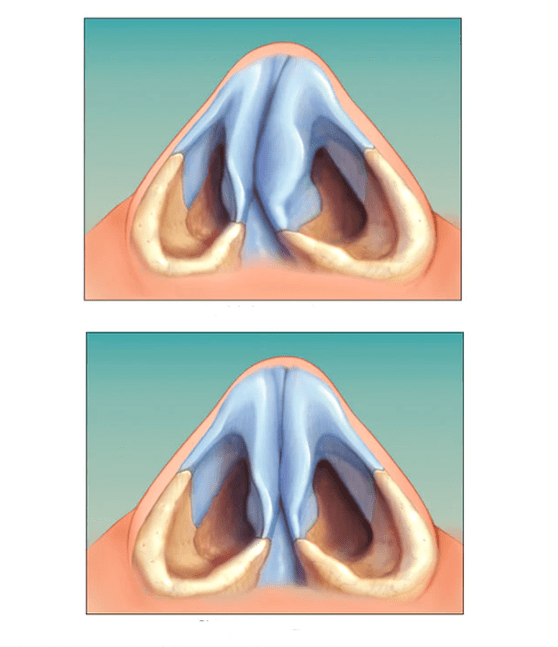
- there are cosmetic defects - curvature, hump, depression;
- difficulty breathing;
- reduced sense of smell;
- there are frequent congestions;
- you constantly feel dryness in the nasopharynx;
- during sleep, breathing is accompanied by snoring;
- frequent headaches and nosebleeds occur;
- reduced attention, memory and performance;
- respiratory allergies appear.
In this case, the mentioned signs are identified in a complex, and the need for surgical correction of the curvature is jointly decided by the patient and the otorhinolaryngologist after the examination, including with the help of an endoscope.
In some cases, surgery is done for other health problems.Thus, the correction of the septum in the nose for people with bronchial disease (for example, asthma) ensures a more complete functioning of the respiratory system.
Preparation before surgery
The operation can be performed after laboratory tests and diagnostic examinations:
- general urine and blood tests;
- biochemical blood test;
- blood test for infections;
- blood test for coagulation (coagulogram);
- checking blood sugar levels;
- ECG and fluorography.
The list is expanded by the doctor's decision if there are appropriate indications in the patient's medical history.
In addition, patients should prepare for surgery several days in advance by avoiding:
- taking pharmaceutical drugs that affect blood clotting (aspirin, heparin, diclofenac, indomethacin, etc.);
- alcohol consumption and smoking;
- Preparation of male patients also includes facial hair removal.
Techniques
The operation can be performed under appropriate anesthesia.If the curvature involves tissues and structures without involving the bony part, then general anesthesia is not required.In this case, local anesthesia is sufficient.In case of interference of bone structures, the operation will be performed under general anesthesia.The method of pain relief can also be complex.
Modern surgery offers several ways to perform the operation.Here, the classical surgical method and the laser surgery for the correction of the nasal septum stand out.In this case, the traditional use of the scalpel involves resection of the submucosa without external incisions.Mechanical action with a scalpel is carried out in the nasal cavity.An endoscope is used to improve control.
In this way, surface correction of the cartilage or correction of the bony part is possible.Due to the fact that the incisions are only on the mucous membrane inside the nasal passages, the final aesthetic effect is very high.There are no visible stitches here, and then no scars.
Laser septoplasty, as the name suggests, involves the use of a laser.This operation is possible in the presence of minor disorders that do not affect the bones.
Laser surgery is performed in two ways:
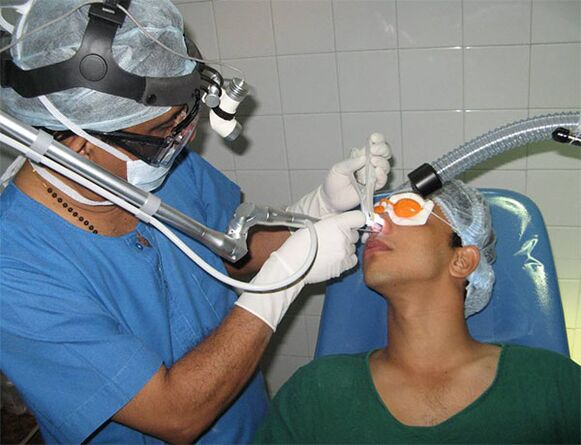
- Correction of the septum with a laser scalpel, which cuts healthy tissue for subsequent removal of excess processes and curvature.
- Correction by bringing the septum to a state of plasticity by heating it with a laser to a high temperature.It is then mechanically given the desired shape.This method can also be called septochondrocorrection.
Characteristics and advantages of laser technology:
- in this case local anesthesia is used;
- low level of complexity of the operation, the duration of which should not last more than half an hour;there are no incisions or deep tissue damage, so the operation is considered bloodless;
- Based on the previous paragraph, it follows that tampons, turunds or gel are not used after surgery;
- the cauterizing and at the same time antiseptic effect of the laser guarantees the absence of further infections and also promotes healing;
- due to the characteristics described above, the rehabilitation period after surgery does not last long and can be carried out on an outpatient basis without round-the-clock supervision;
- The aesthetic appearance of the patient during the recovery period does not suffer, because there are no strong swellings and hematomas.
Recovery period
Unlike the gentle nature of laser surgery to correct the nasal septum, classic surgery involves a longer recovery period.Immediately after the operation, he is required to stay in the hospital to monitor the initial results and help in the healing process.The stationary period can last up to 10 days.
In the first days, breathing is extremely difficult, which is caused by swelling and the presence of gauze or modern silicone tampons or a special gel in the nasal passages.It is worth noting that silicone tampons, due to their structure, help restore the functionality of the respiratory system more effectively.
After removing the used materials, a thorough examination of the nasal passages and septum is performed.Further recovery will continue outside the health facility with periodic visits to the doctor for examination and administration of prescribed medications.Without any complications, the effect can be restored by the time of discharge, even if the swelling lasts a little longer.
Possible complications
Possible complications in the postoperative period:
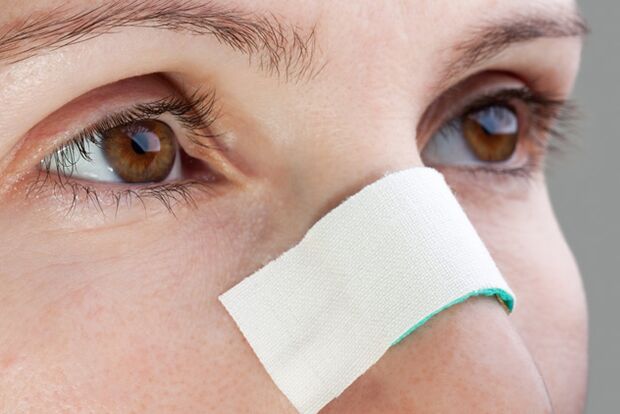
- pain syndrome;
- hematomas and swellings;
- bleeding from the nasal passages;
- violation of the integrity of the septum due to the formation of a passage channel connecting the nasal passages;
- numbness in the maxillofacial area due to nerve damage during surgery;
- purulent inflammation;
- sinusitis, sinusitis, etc.;
- adhesions in the nasal cavity;
- dullness of smell;
- formation of blood clots;
- deformation of the shape of the nose of various kinds.
In order to alleviate the condition during the rehabilitation period and prevent possible complications, you must follow several rules:
- do not visit baths/saunas and solariums, do not take hot baths and showers;
- do not stay in the sun for a long time;
- do not consume hot food and drink.
To avoid unnecessary pressure and damage:
- limit physical activity;
- sleep on your back.
To prevent dry mouth (due to mouth breathing), increased fluid intake is recommended.You should also use prescribed anti-inflammatory drugs and painkillers, and if necessary, antibiotics.In addition, visit an ENT specialist on time.
Depending on the chosen institution, the price of the operation is also determined.For many patients, the services of private medical institutions seem the most acceptable.Therefore, the price will vary depending on the price list of the clinic and the type of operation.In addition, the medical services provided may cost more if a classic operation is performed and the patient continues to stay in the clinic during the rehabilitation period.